In Bhutan, phalluses protect against evil spirits
Majestic kingdom of Asia, Bhutan attracts with its giant and endless mountains, beautiful monasteries, its trekking land,
Majestic kingdom of Asia, Bhutan attracts with its giant and endless mountains, beautiful monasteries, its trekking land, its absolute calm interrupted only by the sound of bells and animals, its generous people... This is often the image one has before traveling to Bhutan, but few tourists expect to see erect phalluses painted on a large number of houses. This is not at all the work of rebellious adolescents, but an ancestral tradition still practiced today, although increasingly controversial. We explain this astonishing phallus cult in Bhutan:
Drukpa Kunley, the monk at the origin of the cult
Although phallic symbols existed before the introduction of Buddhism to Bhutan, the current cult would be the legacy of a Tibetan monk, Drukpa Kunley, who arrived in Bhutan in the 15th century. Somewhat rebellious and against the system and hierarchy, Drukpa Kunley was a womanizer: according to certain versions of his biography, he allegedly slept with more than 5,000 women! He is called the "divine madman" (Mad Saint) and for good reason... This monk even allegedly replaced holy water with his urine during religious ceremonies.
If Drukpa Kunley is still appreciated today, it is because he represents a heterodox practice of Buddhism, showing that Buddhism is accessible to all. In any case, the phallus has since become an important symbol in the country.
Phalluses, protectors of homes
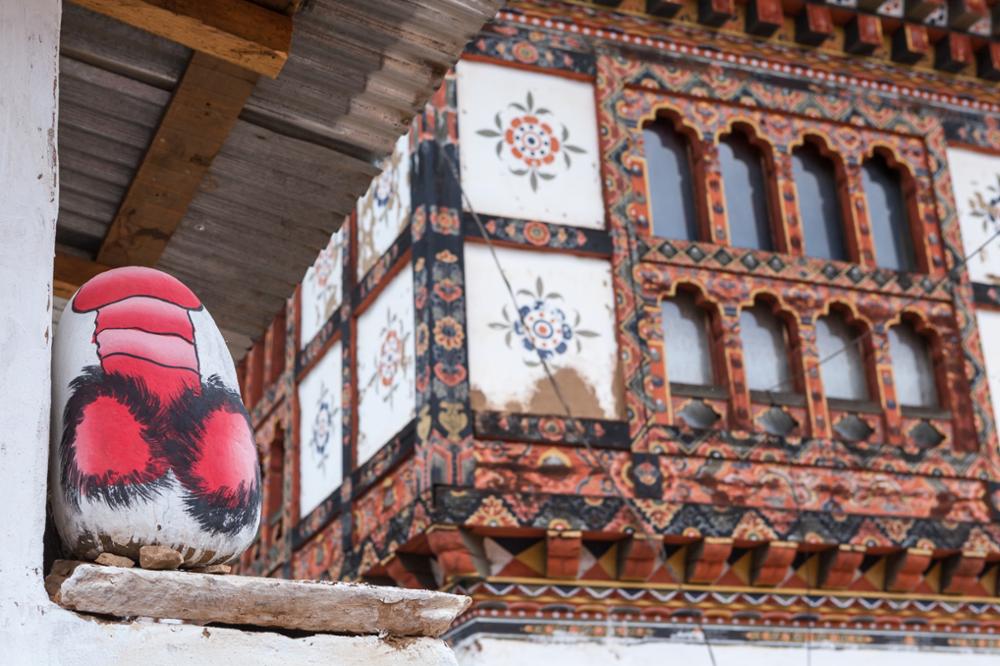
In Bhutan, the phallus is above all a sacred symbol meant to protect against evil spirits and the evil eye. It is found on houses almost everywhere. It would prevent demons from entering the home.
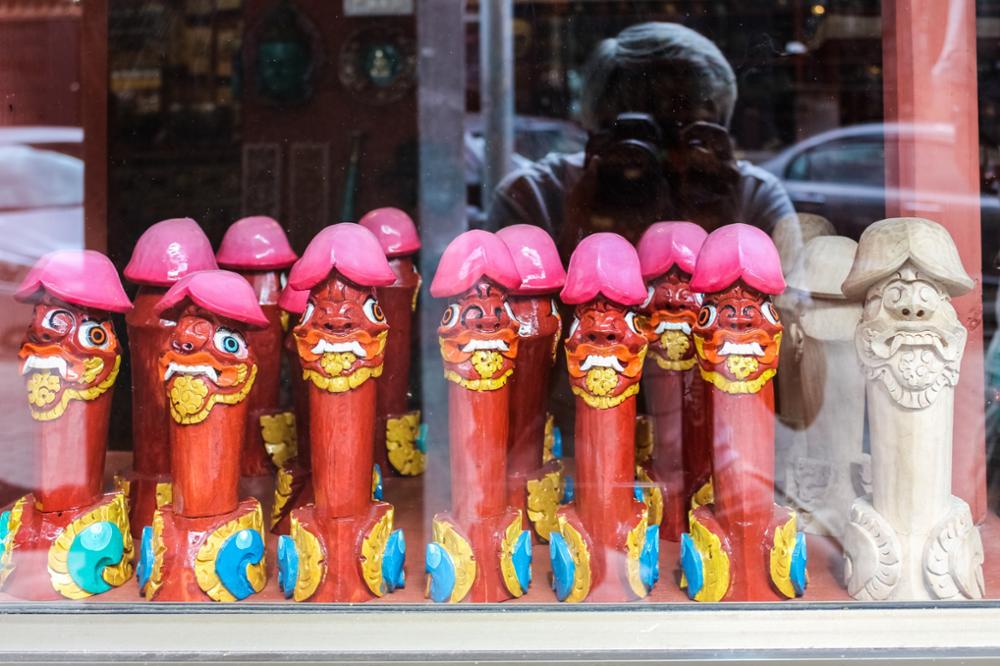
This cult is still practiced today, and when building a house, specialists are generally invited to hang wooden phalluses at the four corners of the roof or paint them around the door. That said, the practice is increasingly controversial, especially in cities. Generally, city dwellers prefer, if needed, to hang a few wooden phalluses on the roof rather than display large ones on the façades of houses. Places of worship are generally exempt from this somewhat provocative symbol.
The painted phallus is sometimes surrounded by a dragon, while small wooden statuettes are hung with a dagger. Colors also have their significance. Traditionally, five are used: white represents peace and purity, red wealth and power, yellow prosperity, blue wisdom and green protection.
In addition to serving as an ornament in homes, the phallus is sometimes found in museums, in public squares, or simply in everyday life. For example, before serving drinks to guests, some communities dip a wooden phallus in the glass or cup.
A monastery for fertility
Near the former capital of Bhutan, Punakha, a monastery dedicated to Lama Drukpa Kunley remains an important pilgrimage site. The Chime Ihakhang monastery attracts many women each year, both local and foreign, hoping that this visit will bring them a child. Indeed, while the monastery itself is sober and not the most exceptional, it is renowned for offering fertility to pilgrims. After circling it, a monk blesses the women by placing a wooden phallus on their head.
Domande frequenti
In Bhutan, the phallus is a sacred symbol inherited from the tradition of Tibetan monk Drukpa Kunley (15th century). It is meant to protect houses from evil spirits and the evil eye, and prevent demons from entering the home.
Drukpa Kunley is a Tibetan monk who arrived in Bhutan in the 15th century, known for his heterodox and eccentric practice of Buddhism. Nicknamed the 'divine madman' (Mad Saint), he is at the origin of the phallus cult in Bhutan and remains a venerated figure today.
Traditionally, five colors are used: white symbolizes peace and purity, red wealth and power, yellow prosperity, blue wisdom and green protection.
Chime Lhakhang monastery is located near Punakha, the former capital of Bhutan. It is an important pilgrimage site, especially for women wishing to have children, as it is renowned for bringing fertility.
Yes, the tradition is still alive, especially in rural areas. When building a house, specialists are invited to hang wooden phalluses or paint them on the façade. However, the practice is increasingly controversial in cities, where city dwellers prefer more discreet representations.